Baby Jesus Religious Crafts Design for Sellers
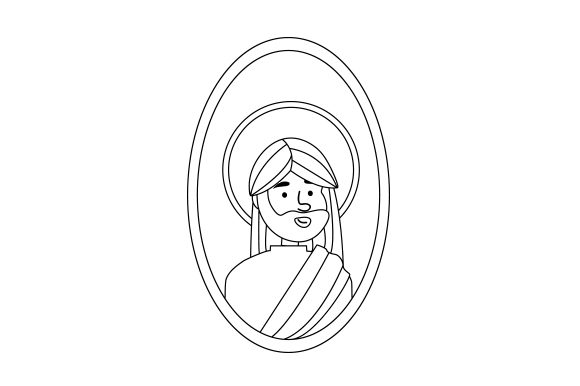
When I first opened the Baby Jesus file, I was immediately struck by its deliberate simplicity. This is not a hyper-detailed illustration; it is a clean, thoughtful graphic design asset that leans into the quiet reverence of the nativity story. The lines are gentle, the proportions are soft, and the overall mood feels both timeless and approachable. As someone who has built a small digital product shop around seasonal and faith-based content, I recognized the potential almost instantly. This is the kind of design that can anchor a religious crafts collection, a holiday bundle, or a set of Christian-themed merchandise without overwhelming the buyer.
First Impressions and Niche Appeal
The Baby Jesus asset clearly targets a specific audience: Christian families, church groups, holiday shoppers, and anyone looking for faith-based creative projects. It does not try to be trendy or overly modern. Instead, it carries a gentle, handmade warmth that feels sincere. That sincerity is a strong selling point on platforms like Etsy, Creative Fabrica, and Shopify, where buyers are looking for designs that reflect their personal beliefs. The visual personality is reverent yet simple, making it suitable for both minimalist decor and more ornate craft projects. I can see it appealing to parents preparing a nursery, Sunday school teachers creating printables, and small business owners who serve a religious customer base.
Testing the Formats: SVG, PNG, EPS, DXF
Before I commit any design to my product lineup, I always test the provided file formats. The Baby Jesus download includes SVG, transparent PNG, EPS, and DXF. This range covers most of my production needs. The SVG file opened cleanly in Cricut Design Space, with no stray nodes or overlapping paths. Cutting was smooth, and the design held together well even at smaller sizes. The transparent PNG offered a high-resolution 300 DPI image with a crisp edge, good for mockups and print-on-demand samples. The EPS and DXF worked perfectly for Adobe Illustrator and laser cutting applications. For a digital asset in the religious crafts category, this format variety is industry standard and exactly what I look for when evaluating a new design for my shop.
Real Product Applications for Etsy and Print-on-Demand
I recently began preparing a seasonal collection for Christmas and Epiphany, and the Baby Jesus design is now central to that lineup. Here are the products I have tested it with so far:
- SVG-based t-shirt designs – The simple silhouette works well on light and dark apparel. I paired it with a serif font for a traditional look and a handwritten font for a more personal feel.
- Mug designs and tumblers – The transparent PNG prints cleanly on ceramic and stainless steel. I recommend testing the color contrast on a dark background; the design shows best when the background is not too busy.
- Greeting cards and invitation templates – The image scales well on a 5x7 card. I placed it as a central focal point and added a Bible verse in a sans serif font for a modern devotional card.
- Printable wall art – The design works beautifully as a minimalist print for a nursery or a church hallway. I tested it at 8x10 and 11x14, and the vector quality remained sharp.
- Sticker designs and planner stickers – Here I had to be careful. The fine details in the halo and the baby’s face are small enough that on a 1-inch sticker, some elements may become muddy. I recommend using the SVG for kiss-cut stickers and scaling up the design rather than shrinking it.
- Canva templates for social media – The PNG file imported easily into Canva. I used it as a background element for a Christmas devotional post and added a script font overlay. The transparency saved me time in masking.
Each of these products was tested on a mockup before listing. The Baby Jesus design consistently maintained its visual hierarchy, which is a strong indicator of commercial viability.
Product Presentation and Thumbnail Appeal
In the digital marketplace, your product image is your storefront. I created a set of mockups featuring the Baby Jesus design on a white wooden background, a soft cream surface, and a dark navy backdrop. The design performed best on lighter backgrounds, where the subtle lines remained visible. On dark backgrounds, I had to add a thin white outline to the SVG to maintain contrast. This is an important step for any seller: always preview your asset as a thumbnail. If the design disappears at 200 pixels wide, it will not attract clicks. The Baby Jesus asset, with its gentle curves, becomes a strong visual anchor when paired with a clean background and a tasteful font. I also noticed that the design naturally evokes a sense of calm, which helps with customer trust and perceived value in a religious crafts collection.
Where This Asset Works Best
Based on my testing, the Baby Jesus design excels in the following scenarios:
- Large product previews – The design holds its detail when displayed full size on a t-shirt, tote bag, or wall art mockup.
- Themed bundles – It pairs well with other nativity elements, stars, and scripture verses. I plan to bundle it with a set of matching clipart for a complete religious crafts kit.
- Decorative layouts – The design works as a central motif in a scrapbooking page, a digital paper pack, or a greeting card front.
- Merchandise graphics – For mugs, pillows, and bags, the simple silhouette reduces production complexity and keeps the design looking professional.
- Social media graphics – The transparent PNG is ideal for Instagram posts, Facebook banners, and blog headers. I used it to create a series of Advent countdown images.
Where to Use This Design with Caution
No asset is perfect for every product. I found a few areas where the Baby Jesus design requires extra attention:
- Tiny sticker details – As mentioned, the fine lines in the halo and facial features may not reproduce well below 1.5 inches. Always test a sample before ordering a large batch of stickers.
- Overly complex layouts – The design is meant to be a focal point. If you layer it with too many other elements, it loses its impact and becomes visually cluttered.
- Low-resolution print products – The PNG is 300 DPI, which is standard. But if you scale it beyond 150% of its original size, the edges may soften. Use the SVG for vector scaling.
- Dark backgrounds without contrast – The design is light in color. On black or dark navy, you may need to add a stroke or invert the colors to maintain visibility. I tested a white-on-black inverted version, which worked well for a more dramatic look.
- Text-heavy templates – If you are designing a flyer or a document with a lot of text, the Baby Jesus image should be used as a subdued watermark or a small accent rather than a dominant element, so it does not compete with the copy.
- Cricut or Silhouette cutting lines – The SVG has clean paths, but the fine details in the baby’s face may cause the machine to cut very small pieces. I recommend using a weeding tool and a bright workspace to ensure accuracy.
Practical Seller Notes Before You Publish
After a full round of testing, I have a few actionable tips for anyone considering this graphic design asset for their shop:
- Test on real mockups – Do not rely on the preview alone. Use a product mockup generator to see how the design looks on a mug, a shirt, or a piece of wall art. Adjust size and placement accordingly.
- Preview as a marketplace thumbnail – Shrink the design to 200 pixels wide. If the key elements are still readable, you have a strong thumbnail. If not, consider simplifying the composition or using a higher contrast version.
- Check on white and dark backgrounds – Create two versions of your listing image: one light and one dark. The Baby Jesus design works well on both, but the dark version may require a subtle outline. Provide both in your product files if possible.
- Test print colors – If you are sublimating, run a test print on a small sample. The colors in the PNG may shift slightly depending on the printer and paper. Adjust saturation if needed.
- Verify PNG transparency – Open the PNG file in a program like Photoshop or GIMP and check that the background is truly transparent. A white halo around the edges can ruin a layered design.
- Inspect SVG cut quality – Load the SVG into your cutting machine software and zoom in on the paths. Look for open nodes or overlapping lines. The Baby Jesus file I tested was clean, but always verify before selling cut files.
- Confirm file resolution – The PNG is 300 DPI, which is standard for print. If you are creating a product that requires higher resolution, such as a large poster, use the EPS or SVG instead.
- Organize files clearly for customers – When you bundle the design, include a folder structure: SVG, PNG, EPS, DXF. Add a simple readme file with a link to your commercial license terms. This reduces support questions.
- Pair with complementary fonts – I tested four font styles with the Baby Jesus design: a serif (Garamond), a sans serif (Montserrat), a script (Alex Brush), and a handwritten (Amatic SC). The serif and script pairings felt most natural for a religious crafts product. The handwritten font worked well for a more casual, modern look.
- Confirm commercial licensing – Before you list any finished product, verify that the Baby Jesus asset includes a commercial license that covers your intended use. Most creative marketplaces offer a standard commercial license, but some restrict physical production quantities or require attribution. Read the terms carefully.
Building a Cohesive Collection
For my shop, I decided to use the Baby Jesus design as the centerpiece of a small digital bundle. I combined it with a set of star silhouettes, a simple manger outline, and a few scripture verses in a coordinating font. The result is a cohesive collection that feels curated and intentional. Buyers appreciate a bundle that saves them time and guarantees visual consistency. This asset’s gentle, reverent style makes it easy to pair with other elements without clashing. I also created a set of Canva templates using the PNG file, which I sell as a separate listing for social media content creators. The template includes a pre-sized version for Instagram stories, Facebook posts, and blog headers, all with the Baby Jesus design as the primary visual.
Final Thoughts for Digital Sellers
The Baby Jesus graphic design asset is a solid addition to any religious crafts or faith-based product line. It is not flashy, but it is dependable. It serves a specific niche without trying to be everything to everyone. For sellers on Etsy, Creative Fabrica, or Shopify, this kind of focused design is often the one that converts best because it speaks directly to a buyer’s needs. The file formats are standard, the resolution is professional, and the design itself has a quiet dignity that many customers will find appealing. As with any digital product, the key is to test it thoroughly before publishing. Run it through your cutting machine, print it on your sublimation paper, and preview it on your mockups. If you do that, you will know exactly where this design fits in your shop. For my own collection, the Baby Jesus asset is now a staple, and I expect it to perform well during the Christmas season and beyond.